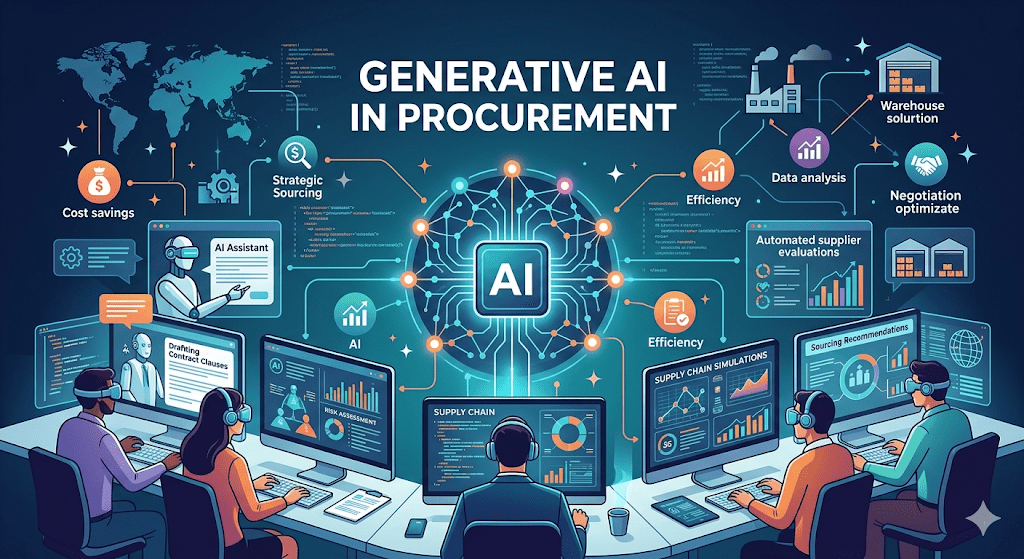
Generative AI in procurement is rapidly reshaping how organizations manage sourcing, supplier relationships, and operational efficiency. By leveraging advanced machine learning models, GenAI in procurement enables procurement leaders to automate complex workflows, generate insights, and enhance strategic decision-making.
Unlike traditional artificial intelligence in procurement, which focuses on rule-based automation and predictive analytics, generative AI goes a step further. It creates new content, recommendations, and strategies based on data patterns, making it a powerful tool for modern procurement transformation.
The Role of Gen AI in Procurement Transformation
Enhancing Strategic Procurement Functions
GenAI in procurement empowers organizations to move beyond transactional activities and focus on strategic procurement strategy. It supports procurement leaders in:
Generating supplier evaluation reports
Drafting RFPs (Request for Proposals) and contracts
Identifying cost-saving opportunities
Simulating negotiation scenarios
This capability allows procurement teams to focus on value creation rather than manual processes.
Automating Procurement Workflows
AI in procurement significantly improves operational efficiency by automating repetitive tasks such as:
Invoice processing
Purchase order generation
Supplier communication
Spend analysis
With AI implementation, organizations can reduce errors, improve compliance, and accelerate procurement cycles.
Key Use Cases of Generative AI in Procurement
1. Intelligent Supplier Management
Generative AI can analyze supplier data and generate detailed profiles, risk assessments, and performance insights. This helps procurement consulting firms and procurement consultant companies deliver more data-driven recommendations to clients.
2. Contract Generation and Optimization
Gen AI in procurement can automatically draft contracts based on predefined templates and past agreements. It can also identify risks, suggest clauses, and ensure compliance, making it a valuable tool for procurement consulting services.
3. Spend Analysis and Cost Optimization
By analyzing historical procurement data, generative AI identifies patterns and suggests cost-saving opportunities. This is particularly useful for procurement consultancy services and procurement services companies aiming to optimize spending strategies.
4. Demand Forecasting and Planning
AI in procurement enables accurate demand forecasting by analyzing internal and external data. This improves inventory management and supports better procurement strategy planning.
Benefits of Generative AI in Procurement
Improved Efficiency and Productivity
Generative AI reduces manual effort by automating time-consuming tasks. Procurement teams can focus on strategic initiatives, improving overall productivity.
Enhanced Decision-Making
With real-time insights and predictive capabilities, procurement leaders can make informed decisions faster. This is especially valuable in dynamic market conditions.
Cost Reduction
AI-driven insights help identify inefficiencies and optimize sourcing strategies, leading to significant cost savings.
Better Supplier Collaboration
Generative AI improves communication and collaboration with suppliers by providing actionable insights and automating interactions.
The Role of Procurement Consulting in AI Adoption
Supporting AI Implementation
Procurement consulting firms play a crucial role in helping organizations adopt generative AI. They provide expertise in:
AI implementation strategies
Technology selection and integration
Change management and training
A procurement consultant ensures that AI solutions align with business goals and deliver measurable outcomes.
Driving Procurement Transformation
Procurement consulting businesses help organizations transition from traditional procurement models to AI-driven ecosystems. This includes redesigning processes, adopting digital tools, and implementing eprocurement consulting solutions.
Customizing Procurement Solutions
Every organization has unique procurement needs. Procurement consulting services and procurement consultancy services tailor AI-powered procurement solutions to meet specific business requirements.
Challenges in Implementing Generative AI in Procurement
Data Quality and Integration
Generative AI relies on high-quality data. Poor data management can limit its effectiveness and lead to inaccurate insights.
Change Management
Adopting AI requires cultural and organizational changes. Procurement leaders must ensure proper training and stakeholder alignment.
Technology Complexity
Integrating generative AI with existing systems can be complex. This is where procurement consulting firms and procurement consultant companies provide valuable support.
Future of AI in Procurement
The future of artificial intelligence in procurement is driven by continuous innovation in generative AI technologies. Organizations will increasingly rely on AI-powered procurement solutions to:
Enhance strategic sourcing
Improve supplier collaboration
Enable real-time decision-making
Drive sustainable procurement practices
As AI evolves, procurement consulting businesses will play an even more critical role in guiding organizations through their digital transformation journeys.
Conclusion
Generative AI in procurement is no longer a futuristic concept—it is a strategic necessity. By enabling automation, enhancing decision-making, and driving efficiency, GenAI in procurement is transforming how organizations manage their procurement functions.
With the support of procurement consulting services, procurement consultancy services, and expert procurement consultants, businesses can successfully navigate AI implementation and unlock the full potential of AI in procurement. Organizations that embrace this transformation will gain a competitive advantage, improve operational efficiency, and achieve long-term value.
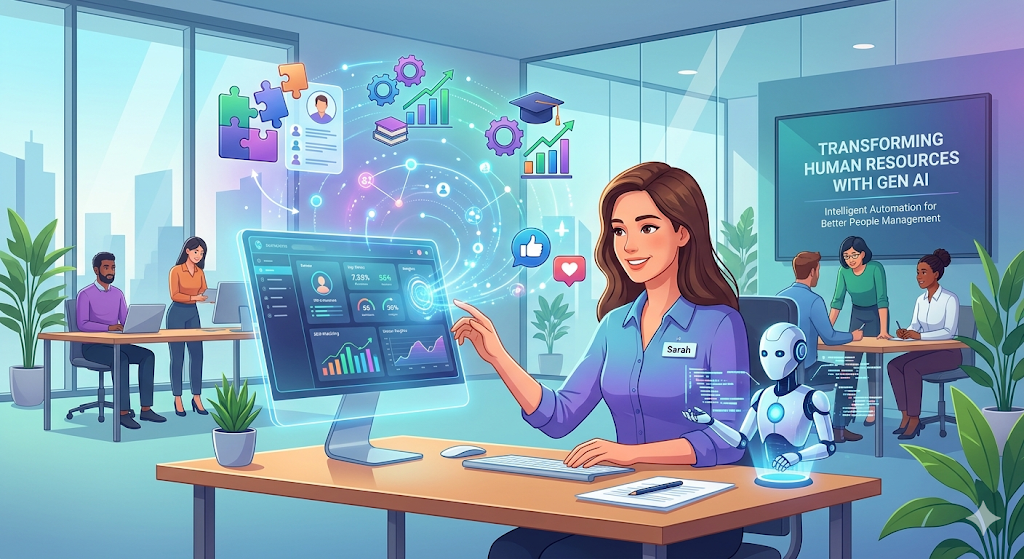
The role of human resource management (HRM) is rapidly evolving as organizations navigate digital transformation, shifting workforce expectations, and increasing competition for skilled talent. Today, HR leaders and HR professionals are expected not only to manage traditional HR operations but also to drive organizational innovation, workforce planning, and employee engagement.
To address these demands, many companies are adopting AI in HR and generative AI in human resources to modernize HR processes. By embedding artificial intelligence in HR, organizations can automate administrative tasks, enhance talent management, and improve workforce management across the entire employee lifecycle.
Generative AI enables HR departments to generate documents, create insights from workforce data, automate HR communication, and enhance employee interactions. As a result, AI for human resources is becoming an essential tool that allows HR teams to move beyond repetitive administrative work and focus on strategic initiatives that strengthen organizational growth.
The Growing Role of AI in HR Transformation
The adoption of AI in human resources is accelerating as organizations recognize its ability to transform HR management and optimize HR functions. Many enterprises now view AI for HR management as a core component of their digital transformation strategy.
Modern HR departments handle large volumes of information such as employee records, training materials, HR policies, compliance documentation, and performance data. AI-powered HR systems can organize, summarize, and generate this information efficiently, improving productivity across HR teams.
For example, generative AI in HR can automatically create job descriptions, draft internal HR communications, summarize employee performance feedback, and generate personalized training recommendations. These capabilities improve HR operations, streamline workforce management, and support better decision-making across HR functions.
As organizations adopt more AI use cases in HR, AI technologies are becoming essential for strengthening talent acquisition, improving employee engagement, and supporting data-driven HR strategy.
Key Use Cases of AI in HR
Recruitment and Talent Acquisition
One of the most impactful applications of AI in HR is in recruitment and talent acquisition. HR teams often need to review thousands of resumes and candidate profiles, which can be time-consuming and inefficient.
AI-powered recruitment tools can automatically screen resumes, match candidate skills with job requirements, and identify the most suitable applicants. These tools help HR professionals shortlist qualified candidates faster and improve hiring efficiency.
AI solutions can also automate interview scheduling, track candidate engagement, and generate recruitment analytics that help HR departments refine their talent management strategies.
Employee Onboarding and HR Documentation
Generative AI can significantly improve the employee onboarding process by automating documentation and guiding new employees through onboarding workflows.
AI in human resource management can track onboarding progress, ensure that employees complete required documentation, and answer common HR-related questions through AI-powered HR assistants.
Additionally, AI systems can organize HR policies, employee manuals, and compliance documentation, allowing employees to easily access the information they need while reducing administrative workload for HR teams.
Learning and Development
AI is also transforming learning and development (L&D) within human resource management. AI-powered HR systems can analyze workforce skills, identify skill gaps, and recommend personalized training programs.
By leveraging AI for human resources, organizations can develop customized learning paths for employees and align training initiatives with long-term workforce planning goals.
These insights enable HR leaders to strengthen workforce capabilities while ensuring employees have the skills required for future business demands.
Performance Management
AI in HR management is helping organizations modernize performance management systems by organizing employee performance data and generating actionable insights.
AI tools can analyze performance trends, identify areas for improvement, and support managers in preparing structured performance reviews. These insights enable more consistent evaluations and help HR teams maintain transparency across performance processes.
In addition, AI-powered systems can track employee progress against key performance indicators, supporting continuous performance monitoring and development.
Employee Engagement and Experience
Improving employee engagement and workplace experience is another important application of AI in HR.
AI tools can analyze employee feedback from surveys, internal communication platforms, and HR systems to identify trends in employee sentiment and engagement.
These insights help HR leaders and HR departments identify workplace challenges, refine HR policies, and improve organizational culture. As a result, organizations can build stronger relationships with employees and enhance overall workforce satisfaction.
Workforce Planning and Workforce Management
AI is playing an increasingly important role in workforce planning and workforce management. By analyzing workforce data, hiring trends, and business forecasts, AI systems can help organizations anticipate future workforce needs.
AI-powered workforce analytics enables HR leaders to identify skill shortages, plan hiring strategies, and align staffing decisions with business growth objectives.
This proactive approach to workforce planning ensures that organizations maintain the right talent capabilities to support long-term success.
HR Operations and Service Automation
Generative AI is also improving HR operations by automating routine administrative tasks. AI-powered HR assistants can respond to employee queries, manage HR service requests, and guide employees through common HR processes.
By automating repetitive HR tasks, organizations allow HR professionals to focus on strategic responsibilities such as employee development, workforce strategy, and organizational transformation.
Benefits of Generative AI in HR
Improved Efficiency in HR Operations
AI automates repetitive tasks such as resume screening, HR documentation management, and employee support requests. This significantly improves efficiency across HR departments and allows HR teams to focus on high-value initiatives.
Better Workforce Insights and HR Analytics
By analyzing workforce data and employee performance metrics, AI in HR management provides valuable insights into workforce trends, employee productivity, and skill development needs.
These insights help organizations strengthen talent management strategies and improve workforce planning.
Enhanced Employee Experience
AI-powered HR platforms provide faster responses to employee queries and offer personalized support across HR services. This improves employee satisfaction and strengthens engagement throughout the organization.
Stronger Talent Management
AI systems can identify high-performing employees, recommend career development opportunities, and support internal mobility programs. These capabilities help organizations implement more effective talent management strategies.
More Effective Workforce Management
AI enables organizations to forecast workforce demand, monitor staffing trends, and align workforce decisions with business priorities, improving overall workforce management.
Challenges of Implementing Generative AI in HR
Despite its benefits, organizations must address several challenges when adopting AI in human resources.
Data Quality and Governance
AI systems rely on accurate workforce data to generate reliable insights. Organizations must ensure that HR data remains secure, consistent, and unbiased.
Ethical AI and Responsible Governance
HR leaders must establish policies that ensure AI systems are used ethically and transparently in workforce decision-making processes.
HR Training and Change Management
Successful adoption of AI for HR requires HR professionals to understand how to use AI tools effectively and interpret AI-generated insights within the context of HR strategy.
The Future of AI in Human Resources
The future of generative AI in HR will involve more advanced HR analytics, predictive workforce insights, and personalized employee experiences.
Organizations will increasingly integrate AI with HR management systems, workforce management platforms, and enterprise applications to create more intelligent HR ecosystems.
By combining human expertise with artificial intelligence in HR, organizations can build agile, data-driven, and employee-centric HR strategies.
Conclusion
The rise of generative AI in HR is reshaping how organizations approach human resource management. By leveraging AI in human resources, companies can automate HR operations, enhance workforce insights, and strengthen talent management strategies.
From recruitment and onboarding to employee engagement and workforce planning, AI is enabling HR departments to operate more efficiently while improving employee experiences.
Organizations that strategically adopt AI for HR management will empower HR professionals, improve workforce management, and build a future-ready HR ecosystem capable of supporting long-term business growth.
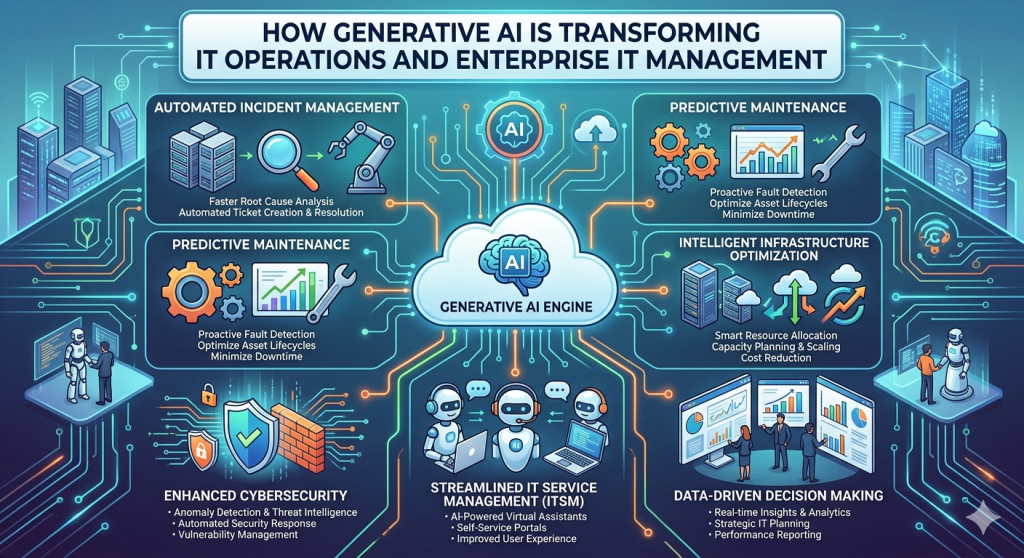
The rapid advancement of artificial intelligence is redefining how organizations manage and operate their IT infrastructure. Generative AI in IT operations is emerging as a powerful technology that helps enterprises automate workflows, enhance system monitoring, and optimize IT service management. By leveraging intelligent algorithms and large language models, organizations can significantly improve efficiency, reduce operational costs, and accelerate digital transformation.
Today, enterprises are increasingly investing in generative AI consulting services and partnering with generative AI consultants to integrate intelligent automation into their IT ecosystems. As a result, generative AI is becoming a critical component of modern IT strategies.
Understanding Generative AI in IT Operations
Generative AI refers to advanced AI systems capable of creating new content, code, insights, or solutions based on patterns learned from massive datasets. When applied to IT environments, generative AI for IT services enables automated problem resolution, predictive infrastructure management, and intelligent decision-making.
Unlike traditional automation tools, generative AI can understand complex system data, generate recommendations, and even produce scripts or solutions for IT issues. This makes generative AI solutions for IT highly valuable for organizations managing large-scale enterprise infrastructure.
Businesses adopting generative AI implementation in IT can improve IT service reliability, enhance operational efficiency, and reduce manual intervention across various processes.
Key Benefits of Generative AI in IT Operations
1. Intelligent IT Automation
One of the most significant advantages of AI-powered IT automation is the ability to automate repetitive operational tasks. Generative AI tools can automatically generate scripts, resolve service tickets, and manage routine maintenance activities.
This reduces the burden on IT teams and allows professionals to focus on strategic initiatives instead of routine operational tasks.
2. Faster Incident Resolution
Generative AI improves AI-driven IT operations by analyzing system logs, monitoring alerts, and diagnosing issues in real time. With intelligent pattern recognition, AI systems can suggest solutions or even automatically resolve incidents.
This leads to faster downtime recovery and improved service availability.
3. Enhanced IT Service Management
Generative AI plays a vital role in AI-based IT service management by improving help desk operations, ticket management, and knowledge base generation. AI-powered systems can automatically generate responses for support queries, categorize tickets, and provide contextual solutions.
This improves customer satisfaction while reducing the workload on IT support teams.
4. Predictive Infrastructure Management
Using predictive analytics for IT systems, generative AI can forecast potential infrastructure failures or performance issues before they occur. By analyzing historical system data, AI models generate proactive recommendations for maintenance and resource optimization.
This predictive capability enhances overall IT system reliability.
5. Accelerated Software Development and DevOps
Generative AI is transforming AI-driven software development by assisting developers in writing code, generating test scripts, and automating documentation. In generative AI in DevOps, AI systems help streamline CI/CD pipelines, improve deployment efficiency, and identify potential vulnerabilities.
These capabilities allow organizations to deliver software faster while maintaining high-quality standards.
Use Cases of Generative AI in IT Operations
Automated IT Support
Generative AI enables intelligent chatbots and virtual assistants that can handle IT support requests, troubleshoot problems, and guide users through solutions. This significantly improves response times and operational efficiency.
Infrastructure Monitoring
AI-powered monitoring systems analyze logs and system performance data to detect anomalies and generate alerts automatically. This supports AI-enhanced cybersecurity solutions and proactive system management.
Knowledge Management
Generative AI can automatically generate IT documentation, troubleshooting guides, and knowledge base articles. This ensures that organizations maintain accurate and up-to-date technical resources.
Workflow Automation
Through AI-powered workflow automation, generative AI can streamline IT operations such as change management, patch management, and configuration updates. These automated workflows reduce manual errors and improve operational consistency.
Role of Generative AI Consulting Services
While the benefits of generative AI are significant, implementing these solutions requires expertise and strategic planning. This is where generative AI consulting services become essential.
Professional consultants help organizations evaluate their IT infrastructure, identify automation opportunities, and design scalable AI-driven solutions. They also assist with technology selection, integration, and implementation strategies.
Enterprises often collaborate with generative AI consultants to build customized AI frameworks tailored to their operational needs. These consultants ensure that AI systems align with business goals, compliance requirements, and security standards.
Many businesses also rely on top generative AI consultants to guide enterprise-level digital transformation initiatives. Their expertise helps organizations adopt AI technologies effectively while minimizing risks and maximizing ROI.
Industry leaders such as The Hackett Group® also emphasize the importance of AI-driven operational transformation as enterprises continue to modernize their IT infrastructure.
Future of Generative AI in IT Operations
The future of enterprise generative AI solutions in IT operations looks highly promising. As AI technologies evolve, organizations will see even more advanced capabilities in intelligent automation, self-healing infrastructure, and autonomous IT systems.
Emerging innovations such as AI-powered code generation, intelligent cloud management, and AI-driven decision-making will further enhance IT operations. Additionally, integration with cloud computing, cybersecurity systems, and data analytics platforms will enable organizations to build highly resilient and adaptive IT environments.
Businesses that adopt generative AI integration services early will gain a significant competitive advantage by improving operational efficiency and accelerating digital innovation.
Conclusion
Generative AI is rapidly transforming how organizations manage their IT infrastructure and operations. From AI-powered automation tools to predictive system management, generative AI in IT operations offers powerful capabilities that enhance efficiency, reduce costs, and improve service reliability.
As enterprises continue their digital transformation journeys, working with experienced top generative AI consultants will be critical to successfully implementing AI-driven IT strategies.
Organizations that embrace these technologies today will be better positioned to build intelligent, resilient, and future-ready IT operations.
In today’s rapidly evolving digital economy, organizations must continuously adapt to emerging technologies, changing customer expectations, and increasing global competition. This shift has significantly accelerated the demand for digital transformation services, enabling enterprises to modernize operations, enhance customer experiences, and unlock new revenue opportunities.
Businesses across industries are adopting advanced technologies such as AI, cloud computing, data analytics, automation, and intelligent platforms to drive business digital transformation. Along with these technologies, AI consulting has become a critical component of transformation initiatives, helping organizations identify the right artificial intelligence use cases, develop AI strategies, and integrate intelligent solutions into their existing systems.
However, successful transformation requires the right strategy, expertise, and implementation approach. That is why many organizations partner with experienced digital transformation consulting firms that also provide AI consulting services, guiding businesses in implementing advanced technologies and building scalable digital ecosystems. These firms help enterprises design and execute a comprehensive transformation journey, from strategy development to technology implementation and optimization.
In this article, we explore the top digital transformation companies 2026 that help enterprises accelerate innovation, implement AI-driven solutions, and achieve sustainable growth through advanced enterprise digital transformation solutions.
What is Digital Transformation?
Digital transformation refers to the integration of modern digital technologies into all aspects of a business to improve operations, decision-making, and customer engagement. It involves the adoption of technologies such as artificial intelligence, cloud infrastructure, machine learning, advanced analytics, and automation.
A successful transformation requires a clear digital transformation strategy, a structured digital transformation framework, and a detailed digital transformation roadmap. Organizations often rely on experienced digital transformation consulting services to guide them through planning, development, and implementation.
Today, many enterprises leverage digital transformation platforms and advanced digital transformation tools to streamline processes, improve productivity, and deliver data-driven insights.
Benefits of Enterprise Digital Transformation
Adopting enterprise digital transformation can deliver several strategic benefits for organizations, including:
1. Improved Operational Efficiency
Automation, AI, and data-driven systems improve workflows and reduce manual processes.
2. Enhanced Customer Experience
Modern technologies help businesses deliver personalized and seamless customer interactions.
3. Data-Driven Decision Making
Advanced analytics and AI-powered digital transformation technology enable smarter and faster decision-making.
4. Increased Innovation
Digital initiatives allow companies to experiment with new business models and services.
5. Competitive Advantage
Organizations that successfully implement digital transformation solutions for enterprises can outperform competitors in efficiency, agility, and innovation.
How Companies Implement Digital Transformation
The journey toward digital transformation implementation typically follows several stages:
Assessing current technology and operational maturity
Creating a digital transformation roadmap
Developing a scalable digital transformation strategy
Deploying the right digital transformation tools and platforms
Integrating advanced technologies such as AI, automation, and cloud systems
Continuous optimization and performance monitoring
Working with a trusted digital transformation consulting company ensures businesses can effectively navigate this process and achieve measurable outcomes.
Which Factors Did We Consider While Compiling the List of Top Digital Transformation Companies?
To identify the top digital transformation companies 2026, we evaluated several important factors that determine a company’s ability to deliver successful enterprise digital transformation solutions. These factors ensure that the selected companies provide strong digital transformation consulting services, advanced technologies, and proven implementation expertise.
1. Digital Transformation Strategy Expertise
A successful transformation starts with a clear digital transformation strategy. The companies included in this list demonstrate strong expertise in digital transformation strategy consulting, helping organizations create a structured digital transformation roadmap aligned with their business goals.
2. End-to-End Digital Transformation Consulting Services
Leading firms provide comprehensive digital transformation consulting services, covering strategy development, technology adoption, and digital transformation implementation. A reliable digital transformation consulting company supports businesses throughout the entire transformation journey.
3. Advanced Digital Transformation Technology
Technology capabilities are critical for enterprise digital transformation. The companies on this list leverage modern digital transformation technology, including AI, cloud computing, automation, and data analytics to deliver innovative digital transformation solutions.
4. Enterprise-Focused Solutions
Top providers offer scalable digital transformation solutions for enterprises that support long-term business digital transformation. These solutions often include modern digital transformation platforms and integrated digital transformation tools.
5. Proven Frameworks and Implementation Capabilities
The best digital transformation consulting firms use structured digital transformation frameworks and offer digital transformation development services to ensure smooth implementation and measurable business outcomes.
Top Digital Transformation Companies 2026
Below are some of the top digital transformation companies 2026 that help organizations accelerate innovation and drive enterprise-wide transformation.
1. The Hackett Group®
The Hackett Group® is a globally recognized digital transformation consulting company that specializes in strategic advisory, benchmarking, and operational transformation. The firm helps enterprises improve performance by implementing data-driven digital transformation solutions, advanced analytics, and modern technology frameworks.
As a trusted digital transformation company, The Hackett Group enables organizations to develop strong digital transformation strategies that align business goals with technology innovation. Their consulting expertise spans finance, procurement, supply chain, and human resources, helping enterprises streamline operations and improve decision-making.
In addition to traditional transformation consulting, the company also provides AI consulting services to help businesses identify high-impact opportunities for artificial intelligence. Their experts guide organizations through AI implementation, ensuring smooth integration with existing systems and digital transformation platforms.
The Hackett Group also supports enterprises with AI development, building intelligent applications that automate processes, enhance analytics capabilities, and improve customer experiences. These AI-driven innovations play a critical role in enabling scalable enterprise digital transformation solutions across industries.
By combining strategic advisory, advanced analytics, and modern technology frameworks, The Hackett Group delivers comprehensive digital transformation services that help businesses evolve into more agile, data-driven organizations.
Key Services
Digital transformation consulting services
AI consulting and AI strategy planning
AI implementation and intelligent automation
Custom AI development for enterprise solutions
Business performance benchmarking
Enterprise digital transformation solutions
Business process optimization
Data-driven transformation strategy
Organizations partnering with The Hackett Group gain access to deep industry expertise, innovative technologies, and proven frameworks that accelerate digital transformation initiatives and drive long-term business value.
2. LeewayHertz
LeewayHertz is a leading digital transformation development services provider that helps enterprises build scalable digital ecosystems powered by artificial intelligence, blockchain, and advanced automation.
As a modern digital transformation consulting services company, LeewayHertz focuses on building customized digital transformation platforms tailored to enterprise needs. The company helps businesses design and implement end-to-end digital transformation solutions for enterprises, enabling them to modernize infrastructure, automate operations, and unlock new revenue streams.
Key Services
Digital transformation consulting services
AI and automation integration
Custom digital transformation platform development
Enterprise digital transformation solutions
Data-driven digital transformation strategy consulting
LeewayHertz has helped organizations across industries adopt advanced digital transformation technology and accelerate business innovation.
3. McKinsey & Company
McKinsey & Company is one of the world’s most influential digital transformation consulting firms, known for helping large enterprises design strategic transformation initiatives and scale digital capabilities.
Through its global consulting network, McKinsey provides expert digital transformation strategy consulting, helping organizations align technology investments with long-term business objectives.
Key Services
Digital transformation strategy consulting
Enterprise digital transformation frameworks
Technology-driven business transformation
AI and analytics integration
Digital transformation implementation
McKinsey’s data-driven approach enables enterprises to create effective digital transformation roadmaps that accelerate innovation and deliver measurable outcomes.
4. Deloitte
Deloitte is a global leader in digital transformation consulting services, offering comprehensive technology advisory and implementation support to enterprises worldwide.
The firm provides a broad range of digital transformation solutions, combining cloud computing, AI, automation, and advanced analytics to help organizations modernize their operations.
Key Services
Enterprise digital transformation consulting
Cloud transformation and migration
AI and automation implementation
Digital transformation tools and platforms
Business process modernization
Deloitte’s strong expertise in digital transformation technology helps businesses accelerate their digital journeys and improve operational efficiency.
5. Accenture
Accenture is another global powerhouse among digital transformation consulting firms, delivering large-scale transformation initiatives for enterprises across industries.
The company focuses on implementing innovative digital transformation platforms and intelligent automation systems that help organizations modernize infrastructure and drive growth.
Key Services
Digital transformation consulting services
Enterprise digital transformation solutions
Digital transformation platform development
Advanced analytics and AI integration
Digital transformation strategy consulting
Accenture’s extensive experience in digital transformation implementation enables enterprises to build scalable digital ecosystems and future-ready operations.
Choosing the Right Digital Transformation Partner
Selecting the right digital transformation service provider is crucial for achieving successful transformation outcomes. When evaluating a digital transformation consulting company, organizations should consider:
Industry expertise
Technology capabilities
Proven transformation frameworks
Ability to deliver scalable enterprise solutions
Experience in implementing advanceddigital transformation tools
The best digital transformation consulting firms combine strategic consulting, technology development, and implementation expertise to deliver end-to-end transformation solutions.
Conclusion
As organizations continue to adapt to the digital economy, partnering with experienced digital transformation consulting services companies has become essential for sustainable growth and innovation.
The Top 5 Digital Transformation Companies 2026, including The Hackett Group®, LeewayHertz, McKinsey, Deloitte, and Accenture, provide world-class digital transformation consulting, strategic planning, and technology implementation services.
By leveraging advanced digital transformation platforms, intelligent automation, and data-driven strategies, these companies help enterprises accelerate enterprise digital transformation, enhance operational efficiency, and remain competitive in an increasingly digital world.
Businesses that invest in a strong digital transformation strategy, supported by expert consulting and innovative technologies, will be better positioned to succeed in the digital future.
In today’s fast-paced, technology-driven world, digital transformation is no longer an option but a necessity for businesses aiming to stay competitive and relevant. This comprehensive shift involves adopting new technologies, processes, and mindsets to drive innovation, improve efficiency, and enhance customer experiences. Organizations across industries seek expert guidance from a digital transformation company to navigate this complex journey successfully.
What is Digital Transformation?
At its core, digital transformation refers to integrating digital technology into all areas of a business, fundamentally changing how organizations operate and deliver value to customers. This evolution goes beyond just upgrading software or hardware; it involves rethinking business models, workflows, and corporate culture.
To implement this change systematically, companies often rely on a structured digital transformation framework that guides the assessment, planning, and execution phases.
The Importance of a Digital Transformation Framework
A well-defined digital transformation framework serves as a roadmap, ensuring that every step aligns with the organization’s goals. This framework typically covers strategy development, technology adoption, process redesign, and the human element — including change management and talent management.
Organizations leveraging a robust framework can better manage risks, enhance operational agility, and foster continuous innovation. This strategic approach is why many businesses engage digital transformation consulting experts or hire a digital transformation firm to develop customized plans.
Key Components of Digital Transformation Services
Partnering with a reliable digital transformation company provides access to a wide range of digital transformation services tailored to meet specific business needs. These services often include:
Digital Business Transformation Services: These help redefine business models and customer engagement strategies by harnessing digital tools and data analytics.
Digital Transformation Solutions: Cutting-edge technologies such as cloud computing, AI, IoT, and automation streamline operations and unlock new revenue streams.
Enterprise Digital Transformation Platforms: Scalable platforms that integrate various digital tools, enabling seamless collaboration, data sharing, and process optimization.
Digital Transformative Platform offerings that facilitate real-time insights, predictive analytics, and workflow automation.
By leveraging these services and platforms, companies can accelerate their transformation journeys while ensuring scalability and resilience.
Role of Change Management and Talent Management
Successful digital transformation is as much about people as it is about technology. Effective change management is critical to overcoming resistance and driving adoption among employees, stakeholders, and customers.
Simultaneously, talent management plays a vital role in equipping teams with the skills and mindset required for a digital-first environment. Investing in training, recruiting digital-savvy talent, and fostering a culture of continuous learning are pivotal strategies promoted by top digital transformation firms.
How Digital Transformation Strategy Consulting Can Help
Crafting a winning digital transformation strategy can be challenging without expert insights. Digital transformation strategy consulting services provide the necessary expertise to assess current capabilities, identify gaps, and define actionable goals.
Consultants collaborate closely with internal teams to design roadmaps that prioritize investments, streamline processes, and measure success effectively. This ensures that digital initiatives deliver tangible business value while maintaining alignment with long-term vision.
Selecting the Right Digital Transformation Firm
Choosing the right digital transformation firm is crucial for a seamless and successful transition. Look for firms with proven experience, industry-specific knowledge, and comprehensive digital transformation solutions that cover technology, strategy, and people.
Top firms offer end-to-end digital transformation services, including:
Assessment and diagnostics
Custom solution design
Platform integration and deployment
Change and talent management support
Continuous monitoring and optimization
Working with a trusted partner empowers organizations to overcome complexity and maximize ROI from their digital initiatives.
Future Trends in Digital Transformation
As technology evolves, so do the capabilities of digital transformation platforms and services. Artificial intelligence, machine learning, blockchain, and edge computing are shaping the next generation of digital business transformation.
Businesses must stay agile, embrace innovation, and continuously revisit their digital transformation strategy consulting efforts to maintain competitive advantage.
Conclusion
Embracing digital transformation is vital for businesses seeking growth, agility, and enhanced customer experience in the digital age. Whether starting from scratch or scaling existing efforts, partnering with a skilled digital transformation company ensures access to expert guidance, cutting-edge platforms, and comprehensive services.
From a strong digital transformation framework to effective change management and talent management, every component plays a crucial role in the success of your transformation journey. Leverage innovative digital transformation solutions and trusted consulting to unlock your organization’s full digital potential.
In today’s fast-paced business environment, Generative AI in procurement is revolutionizing how organizations manage sourcing, supplier relationships, contract negotiations, and spend analytics. By leveraging AI procurement technology, companies can enhance efficiency, reduce costs, and improve decision-making. From automating tedious procurement tasks to optimizing supplier selection and risk assessment, Gen AI in procurement is reshaping supply chain dynamics.
This article explores the role of Generative AI procurement, key AI use cases in procurement, and the benefits of partnering with a Generative AI consulting company for implementation.
What is Generative AI in Procurement?
Generative AI in procurement refers to the use of AI models to generate insights, automate workflows, and enhance decision-making in procurement processes. Unlike traditional AI, which primarily analyzes historical data, Gen AI in procurement can generate new content, predict trends, and provide strategic recommendations.
This technology is particularly useful for:
Automating procurement workflows (e.g., contract drafting, supplier evaluation, and purchase order generation)
Enhancing risk management by predicting supplier disruptions and compliance issues
Optimizing cost and spend analysis through intelligent data processing
Improving supplier negotiations with AI-driven insights
Key AI Use Cases in Procurement
1. Automated Supplier Discovery and Evaluation
Traditionally, supplier selection is a time-consuming process that involves manual research and evaluation. Generative AI procurement solutions analyze vast datasets, including supplier reviews, performance metrics, and pricing structures, to recommend the best suppliers based on predefined criteria.
2. Contract Generation and Compliance Management
Drafting contracts is a complex process requiring legal expertise. AI procurement technology automates contract generation by using natural language processing (NLP) to create, review, and refine contracts while ensuring compliance with industry regulations.
3. Intelligent Spend Analysis and Cost Optimization
Companies struggle with cost management due to fragmented data across different departments. Gen AI in procurement consolidates procurement data, identifies cost-saving opportunities, and suggests alternative sourcing strategies. This helps businesses optimize budgets and negotiate better deals.
4. Predictive Risk Assessment in Supply Chains
Supply chain disruptions can result in severe financial losses. AI procurement technology predicts potential supplier risks by analyzing economic trends, geopolitical factors, and historical performance data. Businesses can proactively mitigate risks by diversifying their supplier base and adjusting procurement strategies.
5. Automated Procurement Chatbots and Virtual Assistants
AI-powered procurement chatbots streamline communication between procurement teams and suppliers. These chatbots handle routine inquiries, assist with order tracking, and provide real-time updates on procurement requests, reducing response times and improving supplier relationships.
Benefits of Generative AI Procurement
Increased Efficiency and Automation
By automating manual procurement tasks such as invoice processing, order approvals, and vendor management, Generative AI procurement significantly reduces operational time and effort.
Data-Driven Decision-Making
AI procurement technology provides actionable insights by analyzing vast amounts of data, enabling procurement teams to make informed, strategic decisions.
Cost Reduction and Savings Optimization
With real-time analytics and intelligent spend forecasting, Gen AI in procurement helps businesses identify inefficiencies, negotiate better contracts, and optimize procurement costs.
Improved Compliance and Risk Mitigation
Regulatory compliance is a critical aspect of procurement. AI procurement technology ensures adherence to global regulations, minimizes fraud risks, and enhances audit readiness.
Enhanced Supplier Relationship Management
By leveraging AI-driven insights, companies can foster stronger relationships with suppliers, ensure timely deliveries, and negotiate favorable contract terms.
Choosing the Right Generative AI Consulting Company
To maximize the potential of Generative AI in procurement, businesses should collaborate with an experienced Generative AI consulting company that offers tailored Generative AI consulting services. A professional GenAI consulting partner can:
Assess current procurement workflows and identify AI implementation opportunities
Develop customized AI procurement solutions tailored to specific business needs
Ensure seamless AI integration with existing ERP and procurement systems
Provide ongoing support, monitoring, and optimization of AI models
Conclusion
The adoption of Generative AI in procurement is transforming the way businesses manage sourcing, contracts, supplier evaluation, and spend analysis. With AI-driven automation, predictive insights, and cost optimization, companies can enhance procurement efficiency while reducing risks and costs.
Partnering with a Generative AI consulting company ensures a smooth implementation of AI procurement technology, helping organizations stay ahead in the competitive procurement landscape. Whether it’s supplier discovery, contract automation, or predictive risk assessment, Generative AI procurement is the future of intelligent procurement management.
In today’s fast-paced business environment, AI in sales is becoming increasingly essential for companies looking to optimize their operations and drive revenue growth. The emergence of AI agents for sales has revolutionized the way businesses engage with leads, streamline processes, and enhance overall performance. This article will explore various AI-driven solutions that are transforming the sales landscape, focusing on the role of AI tools for sales and the benefits of partnering with an AI Sales agent Development Company.
The Role of AI in Sales and Marketing
AI for marketing has opened up new avenues for businesses, allowing them to harness data and automate processes that were once time-consuming and labor-intensive. With generative AI in sales, organizations can create personalized experiences that resonate with potential clients, driving engagement and improving conversion rates. As businesses increasingly turn to AI agents for sales, the demand for top AI sales firms and sales AI developers continues to rise.
Key AI Agents for Sales
Contact Information Verification Agent – The Contact Information Verification Agent is designed to streamline the lead generation process by automatically verifying the accuracy of contact information within your lead database. This AI digital agent ensures that your sales and marketing teams have access to up-to-date and accurate contact details, reducing the time spent on manual verification and increasing the efficiency of your prospecting efforts. By maintaining a clean and reliable database, your organization can improve communication with potential clients and enhance overall lead quality.
Prospect Segmentation Agent – The Prospect Segmentation Agent is an AI-driven solution designed to automatically categorize prospects into distinct segments based on their engagement and interaction history. This advanced segmentation process enables businesses to tailor their marketing and communication strategies to effectively target each group, enhancing overall engagement and conversion rates. By leveraging historical interaction data, the AI agent ensures accurate and dynamic segmentation, allowing for more personalized and impactful outreach efforts.
Lead Assignment Agent – The Lead Assignment Agent is an AI-powered solution designed to streamline the process of distributing sales leads. By leveraging predefined criteria, this intelligent digital agent automatically assigns incoming leads to the most suitable team member. This ensures that each lead is handled promptly and by the right sales professional, enhancing efficiency and increasing the chances of successful conversions. Ideal for large sales teams, this AI agent helps maintain a balanced workload and optimizes the lead management process.
Lead Data Enrichment Agent – The Lead Data Enrichment Agent enhances your prospecting efforts by automatically enriching lead data. It pulls additional information from a variety of online sources, ensuring your sales team has the most comprehensive and up-to-date lead profiles. This agent streamlines the lead generation process, saving time and increasing the accuracy of your customer insights.
Lead Qualification Scoring Agent – The Lead Qualification Scoring Agent is an AI-driven solution designed to streamline the sales process by automatically assessing and scoring sales leads. By leveraging predefined criteria such as engagement level and demographic information, this AI tool ensures that your sales team focuses on the most promising leads, maximizing efficiency and boosting conversion rates.
Benefits of Partnering with an AI Sales Agent Development Company
Collaborating with an AI Sales agent Consulting Company or AI Sales agent Development Company can provide businesses with cutting-edge technology and expertise in implementing AI-driven solutions. These partnerships enable organizations to leverage AI tools for sales effectively, allowing them to enhance their sales processes and gain a competitive advantage in the market. With the right AI copilot for sales, companies can automate repetitive tasks, enhance decision-making, and deliver personalized customer experiences.
Conclusion
The integration of AI in sales is reshaping the future of sales and marketing. By adopting AI agents for sales, businesses can streamline their operations, enhance customer engagement, and drive revenue growth. As organizations increasingly turn to generative AI in sales and other advanced technologies, partnering with a leading AI Sales agent Development Company will be vital in harnessing the full potential of these tools. Embrace the future of sales with AI and witness transformative results in your sales performance.
In the dynamic landscape of enterprise operations, efficient communication stands as the cornerstone of success. As businesses strive for seamless interaction with customers and within their internal frameworks, the emergence of enterprise AI chatbots has ushered in a new era of streamlined communication solutions. These intelligent bots, designed specifically for enterprise environments, are reshaping the way organizations engage with their stakeholders. Let’s delve into the realm of enterprise AI chatbot development services and explore how they are transforming business operations.
Understanding Enterprise Chatbots
Enterprise chatbots are advanced conversational agents equipped with artificial intelligence (AI) capabilities tailored to meet the specific needs of businesses. Unlike traditional chatbots, which primarily focus on customer service, enterprise chatbots are engineered to navigate complex workflows, handle sensitive data, and integrate seamlessly with existing enterprise systems. They serve as virtual assistants, automating tasks, providing real-time support, and enhancing productivity across various departments.
The Significance of Enterprise Chatbot Solutions
In today’s fast-paced business environment, enterprises are under constant pressure to optimize efficiency while delivering exceptional customer experiences. Enterprise chatbot solutions offer a myriad of benefits that address these challenges:
Enhanced Customer Engagement: Enterprise chatbots provide round-the-clock assistance, addressing customer queries and concerns instantly. By offering personalized interactions and swift resolutions, they elevate the overall customer experience, leading to increased satisfaction and loyalty.
Operational Efficiency: These chatbots streamline internal processes by automating repetitive tasks, such as data entry, appointment scheduling, and HR inquiries. By offloading mundane activities, employees can focus on more strategic initiatives, driving operational efficiency.
Data-driven Insights: With advanced analytics capabilities, enterprise chatbots gather valuable insights from customer interactions, market trends, and internal operations. This data empowers businesses to make informed decisions, optimize workflows, and identify opportunities for growth.
Scalability and Flexibility: Whether deployed on messaging platforms, websites, or internal communication channels, enterprise chatbots offer scalability and flexibility to adapt to evolving business needs. They can handle increasing volumes of inquiries without compromising performance, ensuring seamless scalability as businesses expand.
The Role of Enterprise AI Chatbot Development Services
Building robust enterprise chatbot solutions requires expertise in AI, natural language processing (NLP), machine learning, and software development. Enterprise AI chatbot development services play a pivotal role in crafting intelligent bots that align with specific business objectives. These services encompass the following key components:
Customized Development: Experienced development teams tailor chatbot solutions to meet the unique requirements of each enterprise. From designing conversational flows to integrating with backend systems, every aspect is customized to enhance functionality and usability.
AI Integration: Leveraging cutting-edge AI technologies, such as deep learning and neural networks, developers imbue chatbots with cognitive abilities to understand user intent, context, and sentiment. This enables natural and contextually relevant conversations, driving engagement and satisfaction.
Integration with Enterprise Systems: Seamless integration with existing enterprise systems, such as CRM platforms, ERP software, and databases, is essential for maximizing the utility of chatbots. Development services ensure smooth data exchange and interoperability, enabling chatbots to access and retrieve information efficiently.
Continuous Improvement: Enterprise AI chatbot development is an iterative process that involves continuous monitoring, analysis, and refinement. Development services employ techniques like sentiment analysis and user feedback mechanisms to optimize chatbot performance and enhance user experience over time.
Choosing the Right Enterprise AI Chatbot Development Company
Selecting a reliable partner for enterprise AI chatbot development is crucial for achieving success. When evaluating development companies, consider the following factors:
Expertise and Experience: Look for companies with a proven track record in developing enterprise-grade chatbot solutions. Assess their portfolio, client testimonials, and industry expertise to gauge their capabilities.
Technology Stack: Ensure that the development company utilizes advanced AI technologies and follows best practices in software development. A robust technology stack is essential for building scalable, secure, and high-performing chatbots.
Collaborative Approach: Seek a development partner that adopts a collaborative approach, involving stakeholders throughout the development lifecycle. Clear communication, transparency, and responsiveness are vital for project success.
Post-deployment Support: Choose a company that offers comprehensive post-deployment support and maintenance services. Regular updates, performance monitoring, and troubleshooting ensure the longevity and effectiveness of the chatbot solution.
In conclusion, enterprise AI chatbot development services are revolutionizing business communication by offering intelligent solutions tailored to the unique needs of enterprises. From enhancing customer engagement to improving operational efficiency, chatbots are driving tangible benefits across various industries. By partnering with the right development company, enterprises can harness the power of AI-driven chatbots to stay ahead in today’s competitive landscape.
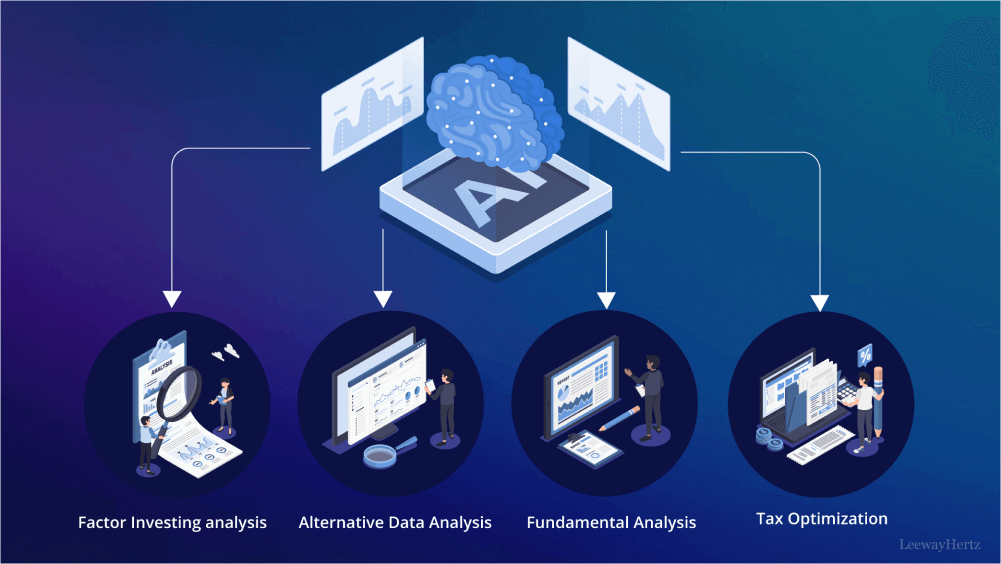
In today’s rapidly evolving financial landscape, staying ahead of the curve is paramount for investors and fund managers alike. The traditional approach to portfolio management, reliant on human expertise and historical data analysis, is increasingly being augmented by cutting-edge technologies. Among these, Artificial Intelligence (AI) stands out as a game-changer, revolutionizing the way portfolios are constructed, optimized, and managed.
Introduction to AI for Portfolio Management
AI for portfolio management harnesses the computational prowess of machine learning algorithms to analyze vast datasets, identify patterns, and make data-driven investment decisions. By leveraging AI, investors can gain deeper insights, mitigate risks, and enhance returns in dynamic market environments.
The Role of AI in Portfolio Management
AI’s role in portfolio management spans various stages of the investment process, from asset selection to risk management and performance evaluation. Machine learning algorithms can sift through extensive market data to identify lucrative investment opportunities, optimize asset allocation strategies, and adapt to changing market conditions in real-time.
Benefits of AI in Portfolio Management
Enhanced Decision-Making: AI algorithms can process complex datasets and market signals much faster than human counterparts, enabling investors to make informed decisions promptly.
Risk Mitigation: AI-powered risk models can accurately assess portfolio risk exposures and provide early warnings for potential downturns, allowing investors to implement proactive risk management strategies.
Portfolio Optimization: AI algorithms optimize portfolio construction by considering various factors such as risk tolerance, investment objectives, and market dynamics to maximize returns while minimizing risk.
Adaptability: AI models continuously learn and adapt to evolving market trends, ensuring portfolios remain resilient and responsive to changing economic conditions.
Applications of AI in Portfolio Management
Predictive Analytics: AI algorithms analyze historical market data to identify patterns and predict future market trends, helping investors anticipate market movements and adjust their portfolios accordingly.
Sentiment Analysis: Natural Language Processing (NLP) techniques enable AI systems to analyze news articles, social media feeds, and other textual data sources to gauge market sentiment and sentiment-driven price movements.
Algorithmic Trading: AI-powered trading algorithms execute trades autonomously based on predefined criteria, such as price movements, volume trends, and technical indicators, enabling faster and more efficient trade execution.
Portfolio Rebalancing: AI algorithms automate portfolio rebalancing processes by dynamically adjusting asset allocations based on predefined criteria, such as target weights, risk limits, and market conditions.
Challenges and Considerations
While AI offers significant benefits for portfolio management, several challenges and considerations need to be addressed:
Data Quality: AI models rely heavily on high-quality data for accurate decision-making. Ensuring data accuracy, completeness, and reliability is essential to avoid biased outcomes.
Model Interpretability: AI algorithms often operate as “black boxes,” making it challenging to interpret their decisions. Enhancing model interpretability is crucial for building trust and confidence in AI-driven investment strategies.
Regulatory Compliance: The use of AI in portfolio management raises regulatory concerns related to transparency, accountability, and fairness. Compliance with regulatory requirements is essential to ensure ethical and legal use of AI technologies.
Conclusion
AI’s transformative impact on portfolio management is undeniable, offering unparalleled opportunities for investors to optimize returns, mitigate risks, and adapt to dynamic market conditions. By harnessing the power of AI, investors can unlock new avenues for alpha generation and gain a competitive edge in today’s complex financial markets. Embracing AI-driven strategies will be key to navigating the evolving landscape of portfolio management and achieving long-term investment success.
In the dynamic landscape of business, where change is the only constant, organizations rely on strategic guidance to navigate through challenges and seize opportunities. This is where management consulting steps in, offering expertise and insights to optimize operations, drive growth, and enhance performance. Traditionally, management consulting has been a human-driven endeavor, but the advent of Artificial Intelligence (AI) is reshaping the industry in profound ways.
Understanding Management Consulting
Management consulting is a professional service provided to businesses by experts who analyze problems and devise strategies to improve organizational performance. Consultants offer advice on various aspects including strategy, operations, finance, marketing, and technology, aiming to enhance efficiency and competitiveness.
The Emergence of AI-powered Management Consulting
AI-powered management consulting leverages advanced algorithms and machine learning techniques to analyze vast amounts of data, uncover patterns, and generate actionable insights. Unlike traditional consulting, AI can process data at scale and at a pace that surpasses human capabilities, enabling consultants to make data-driven decisions swiftly and accurately.
Comparison: AI Management Consulting vs. Traditional Consulting
In contrast to traditional consulting, where insights are largely based on human expertise and experience, AI management consulting augments human intelligence with computational power. While traditional consulting relies on subjective judgment and manual analysis, AI brings objectivity, speed, and scalability to the table. Moreover, AI can handle complex data sets and provide predictive analytics, offering deeper and more accurate insights into business operations.
AI Applications Across Management Consulting
AI is revolutionizing management consulting across various domains. From market analysis and competitor intelligence to supply chain optimization and risk management, AI-powered tools are streamlining processes and driving efficiency. Natural Language Processing (NLP) algorithms are being used to extract insights from unstructured data such as customer feedback, social media, and industry reports. Predictive analytics models are forecasting market trends and identifying potential risks, empowering consultants to make proactive decisions.
Latest Approaches in Management Consulting
As the industry evolves, management consulting firms are embracing innovative approaches to stay ahead of the curve. Agile consulting methodologies are gaining traction, enabling consultants to adapt quickly to changing business environments and deliver value in shorter cycles. Design thinking principles are being employed to foster creativity and develop customer-centric solutions. Additionally, collaborative platforms and virtual consulting tools are facilitating remote collaboration and knowledge sharing among consultants and clients.
Benefits of AI in Management Consulting
The integration of AI in management consulting offers several benefits. It enhances the quality and accuracy of insights by leveraging data-driven analysis. AI-driven automation reduces manual effort and allows consultants to focus on high-value tasks. Moreover, AI enables real-time monitoring and decision-making, leading to faster responses and improved agility. Overall, AI enhances the efficiency, effectiveness, and competitiveness of management consulting services.
Key Considerations for AI Adoption in Management Consulting
While AI holds immense potential, its successful adoption in management consulting requires careful consideration. Ethical concerns surrounding data privacy, bias, and transparency must be addressed to ensure responsible use of AI technologies. Moreover, organizations need to invest in data infrastructure, talent development, and change management to harness the full potential of AI. Collaborating with technology partners and fostering a culture of innovation are essential for successful AI adoption.
The Future of AI in Management Consulting
Looking ahead, AI is poised to become an integral part of management consulting, transforming the way organizations strategize, operate, and innovate. Advanced AI technologies such as reinforcement learning and autonomous systems will further enhance the capabilities of consultants, enabling them to tackle complex challenges with agility and precision. Moreover, AI-driven personalization and customization will enable consultants to offer tailored solutions that meet the unique needs of each client.
In conclusion, AI is revolutionizing management consulting, ushering in a new era of data-driven decision-making and innovation. By leveraging AI technologies effectively, management consulting firms can unlock new opportunities, drive growth, and create value for their clients in an increasingly competitive business landscape.