In the ever-evolving landscape of artificial intelligence (AI), the advent of transformer models has revolutionized the way we approach natural language processing and machine learning tasks. The introduction of models like BERT, GPT-3, and their variants has demonstrated the remarkable capabilities of transformer architectures. However, the relentless pursuit of innovation has led to the birth of a new star on the AI horizon: the Action Transformer Model. In this article, we’ll explore what an Action Transformer Model is, its significance, and its potential applications.
I. What is an Action Transformer Model?
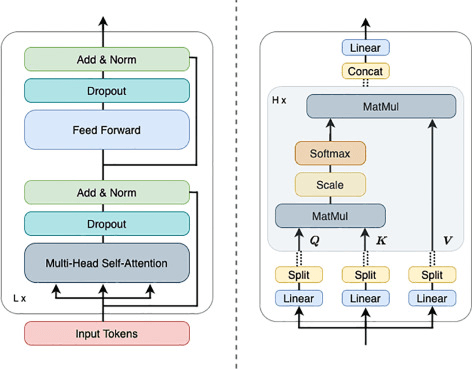
The Action Transformer Model (ATM) is an extension of the well-known transformer architecture, which has its roots in the breakthrough Attention Is All You Need paper by Vaswani et al. ATM builds upon the original concept of self-attention mechanisms and introduces a critical element—action, a concept commonly associated with sequences of events or operations.
ATM is designed to not only understand text but also to generate and comprehend sequences of actions. This is achieved by incorporating action representations and dynamics into the transformer model. Unlike traditional transformers, ATM focuses on not only the content of a sentence but also the actions that need to be taken based on that sentence, making it particularly suited for tasks requiring both comprehension and action generation.
II. The Significance of Action Transformer Models
The emergence of Action Transformer Models marks a significant step forward in AI research and applications for several reasons:
1. Improved Contextual Understanding
ATMs enhance the contextual understanding of text by taking into account the actions associated with a sequence of words. This allows for more precise comprehension of instructions and a better grasp of context in complex natural language understanding tasks.
2. Dynamic Action Generation
One of the defining features of ATM is its ability to generate dynamic actions. For instance, in a conversational context, ATM can not only understand user queries but also generate appropriate responses or actions, making it an invaluable tool for chatbots and virtual assistants.
3. Multimodal Applications
ATMs are not limited to text alone. They can seamlessly integrate with various modalities, including images, audio, and video. This makes them versatile for a wide range of applications, from vision-and-language tasks to interactive multimedia experiences.
4. Human-AI Interaction
The development of ATMs opens up new horizons for human-AI interaction. These models can understand and respond to natural language input with a level of sophistication that was previously challenging to achieve, making AI more accessible and user-friendly.
5. Reinforcement Learning
In reinforcement learning tasks, ATM can play a pivotal role in improving agent-environment interaction. It can understand and generate actions based on environmental cues, thereby enhancing the learning and decision-making capabilities of AI agents.
III. Potential Applications of Action Transformer Models
The potential applications of Action Transformer Models are vast and promising. Here are some domains where ATM can make a significant impact:
1. Virtual Assistants
ATMs can power virtual assistants to not only understand user queries but also execute tasks or provide recommendations based on the context. This could revolutionize the way we interact with our devices and get things done.
2. Content Generation
In the realm of content generation, ATMs can create dynamic and context-aware narratives, making them invaluable for chatbots, content creators, and creative writing applications.
3. Healthcare
In healthcare, ATM can assist in understanding medical reports and suggesting appropriate actions, potentially improving diagnosis and patient care.
4. Autonomous Systems
For autonomous systems like self-driving cars and drones, ATM can enhance decision-making by processing environmental data and generating real-time actions to ensure safety and efficiency.
5. Education
In the field of education, ATM can offer personalized assistance to students by understanding their queries, offering explanations, and providing additional resources.
6. Gaming
ATMs can be used to create more dynamic and responsive non-player characters (NPCs) in video games, improving the overall gaming experience.
IV. Challenges and Considerations
While the potential of Action Transformer Models is promising, there are several challenges and considerations that researchers and developers need to address:
1. Data and Pretraining
Training ATM models requires massive amounts of data, and pretraining them effectively is crucial. This can be resource-intensive and time-consuming.
2. Action Space
Defining the action space and generating meaningful actions is a non-trivial task. Balancing action diversity and relevance is a key challenge.
3. Ethical and Privacy Concerns
As AI systems become more powerful and integrated into our lives, ethical and privacy concerns become more pressing. It’s essential to ensure responsible use and safeguard against misuse of ATMs.
4. Evaluation Metrics
Developing appropriate evaluation metrics for ATM models, especially in cases where actions are involved, is essential to assess their performance accurately.
V. Conclusion
The advent of Action Transformer Models represents a significant leap forward in the field of artificial intelligence. These models not only understand natural language but can also generate dynamic actions, making them versatile and invaluable for a wide range of applications. As research in this area continues to progress, we can expect ATMs to play a pivotal role in shaping the future of human-AI interaction, making our interactions with technology more intuitive and powerful.
In the journey towards unleashing the full potential of Action Transformer Models, researchers and developers must address various challenges and ensure responsible use. With careful consideration and continued innovation, ATMs could open up new horizons for AI applications across diverse domains, ushering in a new era in AI technology.
 Archie Evans