Introduction
In recent years, the integration of Artificial Intelligence (AI) in the workplace has emerged as a transformative force, reshaping the dynamics of how businesses operate and employees collaborate. This article delves into the multifaceted impact of AI on the modern workplace, exploring the realms of AI in Workplace Management.
The Rise of Artificial Intelligence in the Workplace
As technology continues to evolve, businesses are increasingly turning to AI to enhance efficiency, streamline processes, and drive innovation. “Artificial Intelligence in the Workplace” has become a pivotal phrase, encapsulating the myriad ways AI is revolutionizing daily operations.
1. Automating Repetitive Tasks
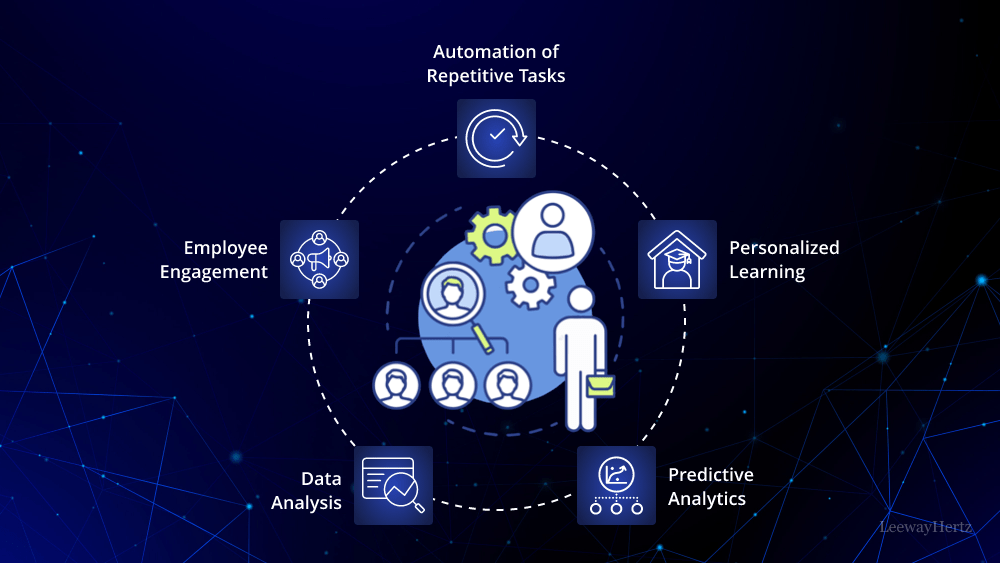
One of the primary applications of AI in the workplace is the automation of repetitive tasks. Mundane and time-consuming activities, such as data entry and basic customer service, can be delegated to AI systems, freeing up human resources to focus on more strategic and creative endeavors.
2. Enhancing Decision-Making
AI algorithms can analyze vast datasets at unprecedented speeds, providing valuable insights to support decision-making processes. From financial forecasting to market trend analysis, AI empowers organizations to make informed choices, driving growth and sustainability.
AI for Workplace: Nurturing a Collaborative Environment
The infusion of AI in the workplace extends beyond mere automation. It fosters a collaborative environment by augmenting human capabilities and facilitating seamless communication.
1. Virtual Collaboration Tools
AI-powered virtual collaboration tools are becoming integral to remote work setups. These tools leverage natural language processing and machine learning to enhance communication, making virtual meetings more interactive and efficient. Features like real-time language translation contribute to breaking down language barriers, promoting global collaboration.
2. Personalized Learning and Development
AI-driven learning platforms tailor training programs to individual employee needs. By analyzing performance data, AI identifies areas of improvement and delivers personalized learning experiences. This not only accelerates skill development but also contributes to employee satisfaction and retention.
AI in Workplace Management: Optimizing Efficiency and Employee Experience
Effective workplace management is paramount for organizational success. AI plays a pivotal role in optimizing processes, ensuring efficiency, and enhancing the overall employee experience.
1. Predictive Analytics for HR
AI-driven predictive analytics revolutionize human resources management. These systems can forecast employee turnover, identify talent gaps, and even predict potential workplace conflicts. By leveraging this information, HR professionals can proactively address issues and create a more harmonious work environment.
2. Employee Well-being Applications
AI applications focused on employee well-being are gaining traction. From mood analysis to stress detection, these tools can provide valuable insights into the mental and emotional states of employees. Companies can use this data to implement targeted initiatives aimed at improving overall well-being and job satisfaction.
Challenges and Considerations
While the benefits of AI in the workplace are substantial, it is crucial to acknowledge and address the challenges that come with its implementation.
1. Ethical Considerations
The use of AI raises ethical concerns, especially regarding privacy and data security. Striking a balance between leveraging AI for workplace optimization and respecting individual privacy is imperative.
2. Employee Resistance and Training
Resistance to AI adoption among employees is a common hurdle. Organizations must invest in comprehensive training programs to ensure that employees are equipped with the skills necessary to collaborate effectively with AI systems.
The Future of AI in the Workplace
As technology continues to advance, the future of AI in the workplace holds exciting possibilities. The ongoing development of more sophisticated AI algorithms, coupled with the integration of technologies like augmented reality and natural language processing, promises to further enhance the workplace experience.
Conclusion
Artificial Intelligence in the Workplace is not merely a buzzword; it is a paradigm shift in how businesses operate and employees engage with their work. From automation of repetitive tasks to fostering a collaborative environment and optimizing workplace management, the impact of AI is pervasive. As organizations navigate this transformative landscape, striking a balance between innovation and ethical considerations will be essential to ensuring a future where AI enhances, rather than replaces, the human experience in the workplace.
 Archie Evans