In today’s rapidly evolving financial landscape, staying ahead of the curve is paramount for investors and fund managers alike. The traditional approach to portfolio management, reliant on human expertise and historical data analysis, is increasingly being augmented by cutting-edge technologies. Among these, Artificial Intelligence (AI) stands out as a game-changer, revolutionizing the way portfolios are constructed, optimized, and managed.
Introduction to AI for Portfolio Management
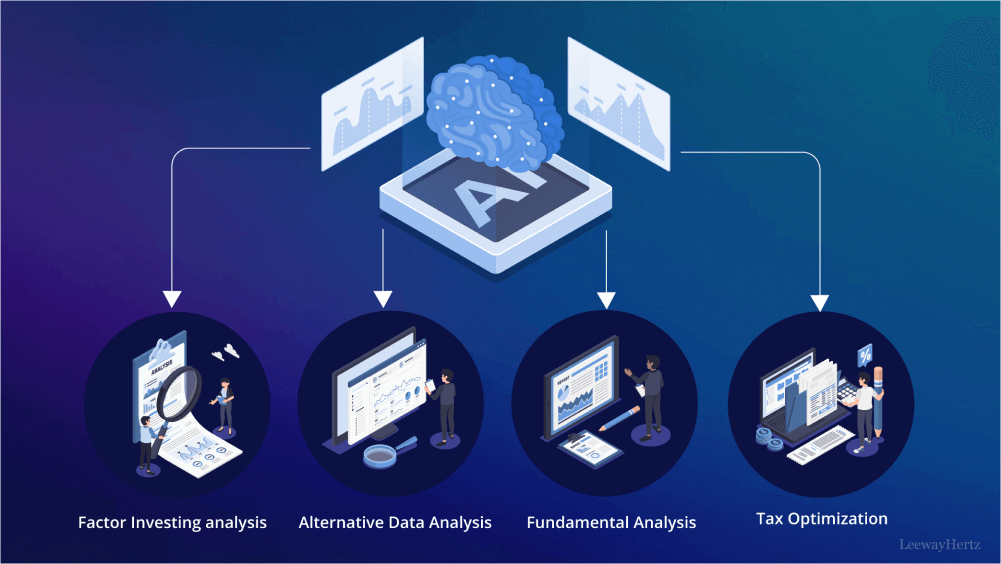
AI for portfolio management harnesses the computational prowess of machine learning algorithms to analyze vast datasets, identify patterns, and make data-driven investment decisions. By leveraging AI, investors can gain deeper insights, mitigate risks, and enhance returns in dynamic market environments.
The Role of AI in Portfolio Management
AI’s role in portfolio management spans various stages of the investment process, from asset selection to risk management and performance evaluation. Machine learning algorithms can sift through extensive market data to identify lucrative investment opportunities, optimize asset allocation strategies, and adapt to changing market conditions in real-time.
Benefits of AI in Portfolio Management
- Enhanced Decision-Making: AI algorithms can process complex datasets and market signals much faster than human counterparts, enabling investors to make informed decisions promptly.
- Risk Mitigation: AI-powered risk models can accurately assess portfolio risk exposures and provide early warnings for potential downturns, allowing investors to implement proactive risk management strategies.
- Portfolio Optimization: AI algorithms optimize portfolio construction by considering various factors such as risk tolerance, investment objectives, and market dynamics to maximize returns while minimizing risk.
- Adaptability: AI models continuously learn and adapt to evolving market trends, ensuring portfolios remain resilient and responsive to changing economic conditions.
Applications of AI in Portfolio Management
- Predictive Analytics: AI algorithms analyze historical market data to identify patterns and predict future market trends, helping investors anticipate market movements and adjust their portfolios accordingly.
- Sentiment Analysis: Natural Language Processing (NLP) techniques enable AI systems to analyze news articles, social media feeds, and other textual data sources to gauge market sentiment and sentiment-driven price movements.
- Algorithmic Trading: AI-powered trading algorithms execute trades autonomously based on predefined criteria, such as price movements, volume trends, and technical indicators, enabling faster and more efficient trade execution.
- Portfolio Rebalancing: AI algorithms automate portfolio rebalancing processes by dynamically adjusting asset allocations based on predefined criteria, such as target weights, risk limits, and market conditions.
Challenges and Considerations
While AI offers significant benefits for portfolio management, several challenges and considerations need to be addressed:
- Data Quality: AI models rely heavily on high-quality data for accurate decision-making. Ensuring data accuracy, completeness, and reliability is essential to avoid biased outcomes.
- Model Interpretability: AI algorithms often operate as “black boxes,” making it challenging to interpret their decisions. Enhancing model interpretability is crucial for building trust and confidence in AI-driven investment strategies.
- Regulatory Compliance: The use of AI in portfolio management raises regulatory concerns related to transparency, accountability, and fairness. Compliance with regulatory requirements is essential to ensure ethical and legal use of AI technologies.
Conclusion
AI’s transformative impact on portfolio management is undeniable, offering unparalleled opportunities for investors to optimize returns, mitigate risks, and adapt to dynamic market conditions. By harnessing the power of AI, investors can unlock new avenues for alpha generation and gain a competitive edge in today’s complex financial markets. Embracing AI-driven strategies will be key to navigating the evolving landscape of portfolio management and achieving long-term investment success.
 Archie Evans